What To Check Before A Foundation Shade Test Before Buying Online
A practical step-by-step guide to what to check before a foundation shade test before buying online, including preparation, instructions, common issues, tips, and next steps.
What To Check Before A Foundation Shade Test Before Buying Online
Choosing a foundation shade online is challenging because screens alter colors and lighting varies. This guide helps you prepare by evaluating your skin's undertone, checking the product's official description, using virtual try-on tools responsibly, and reading customer reviews for real-world feedback. By following these steps, you'll reduce the chance of a mismatch and feel more confident ordering foundation without seeing it in person. The focus is on practical checks you can do at home using your own skin, lighting, and the product information provided by the retailer, without relying on brand names or complex technology.
Fast Answer
- Identify your skin's undertone—cool, warm, or neutral—using the vein test or jewelry test in natural daylight.
- Cross-reference the foundation's official shade description and customer reviews for context on how it actually looks on skin.
Before You Start
- Clean your face and wait at least 15 minutes so your skin's natural tone is visible without the influence of makeup or skincare residue.
- Find a window with indirect natural daylight; turn off overhead lights and lamps so you're not fooled by warm or cool artificial lighting.
- Gather a mirror (preferably handheld) and a white piece of paper or card to hold near your jawline, which helps neutralize surrounding colors.
- Write down your known undertone from previous matches, but be ready to re-evaluate because your skin can shift with seasons, hormones, or skincare changes.
Step-by-Step Instructions
Analyze Your Skin's Undertone in Natural Light
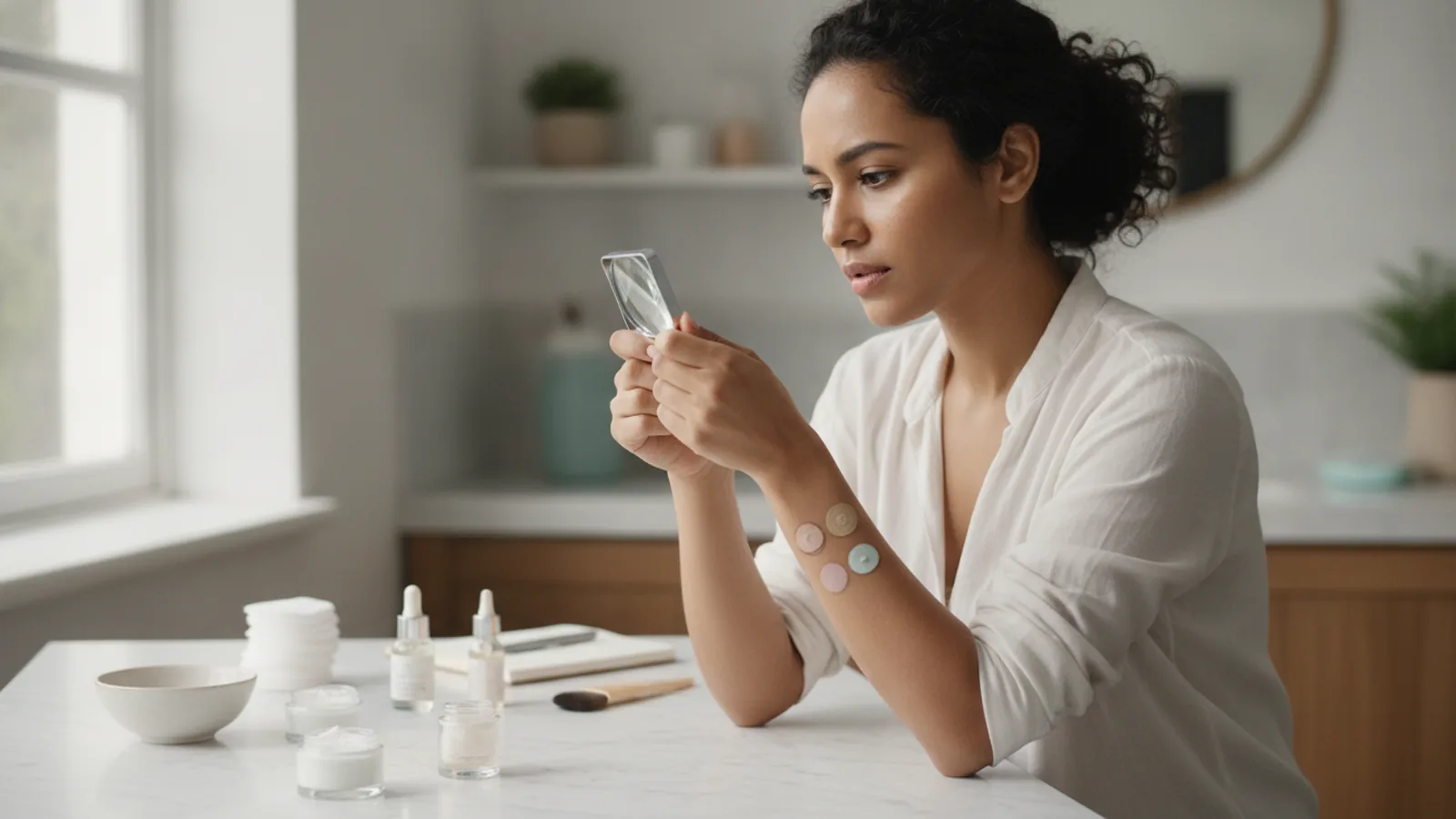
Start by examining the color of the veins on the inside of your wrist. In natural daylight, if your veins appear blue or purple, you likely have a cool undertone; if they look green or olive, you have a warm undertone; if you see both colors or cannot decide, you may be neutral. Also notice how your skin reacts to the sun: do you burn easily (cool) or tan deeply (warm)? You can also hold a piece of pure white paper near your face—if your skin looks yellowish, you're warm; if it looks pinkish, you're cool; if it's inconclusive, you're neutral. This step is crucial because matching foundation to your surface skin without identifying the undertone often leads to a mask-like appearance. Take a photo of your wrist and jawline in that light to keep for reference.
Read the Official Shade Name and Description
Look up the foundation you want and scroll to the shade selector. Copy the complete shade name (e.g., 'ivory with pink undertone' or 'golden beige') and read any written description. Some brands note the undertone directly in the name, such as 'cool porcelain' or 'warm sand.' If the description mentions 'pink,' 'peach,' or 'red' it's cool; 'yellow,' 'gold,' or 'olive' is warm. If it says 'neutral' or 'balanced,' that's a safe guess for neutral skin. Be wary of names that are only color words like 'buff' or 'nude' - they give no clue. Write down the exact description and compare it to your undertone analysis from step one. This helps narrow down which specific shade in the range matches your skin.
Use a Virtual Try-On Tool, but with Caution
Many beauty retailers offer a virtual try-on feature on their app or website. You upload a clear photo of your face in even lighting, or use a live camera. The tool applies the foundation to your image to simulate the shade. This can give you a rough idea, but remember: the tool's accuracy depends on the quality of your camera, the lighting in your photo, and the software's color calibration. For a more reliable result, take a fresh photo in the same window light you used for your undertone check, with your face front and center. Then try the shade you're considering on your jawline in the virtual tool. Look for how well it blends into your neck, not just your face. If the tool is off, it may still help you eliminate obviously wrong shades.
Study Customer Reviews for Real-Life Context
Go to the review section for the specific shade you're considering. Read reviews from people who share your skin tone or undertone. Look for phrases like 'I'm fair with pink undertones and this was a perfect match' or 'I have medium skin with yellow undertones and this looked orange on me.' Pay attention to any negative reviews about the shade looking different than expected, such as being lighter or darker than the photo. Also note if reviewers say the foundation oxidizes (changes color after application). For instance, if several people with your undertone say the shade pulled more neutral, you might need to adjust your choice. Do not rely on star ratings alone; read the text. This step gives you real-world information you cannot get from official images.
Decide Between a Single Shade or a Convenient Alternative
If you are torn between two shades, consider which is closer to your undertone. If you are still unsure, think about whether you want to get a shade that is slightly lighter (if you always set with powder) or slightly darker (if you prefer more coverage to even out redness). Another option is to look for a foundation that comes in a set of small samples or lipstick-style sticks that are easy to test. If the product is sold in a click-open tube, you might be able to buy a mini size. Always check the retailer's return policy for used items, because many allow returns for color mismatches. This ensures you are not stuck with a wrong shade.
Place Your Order and Prepare for Home Testing
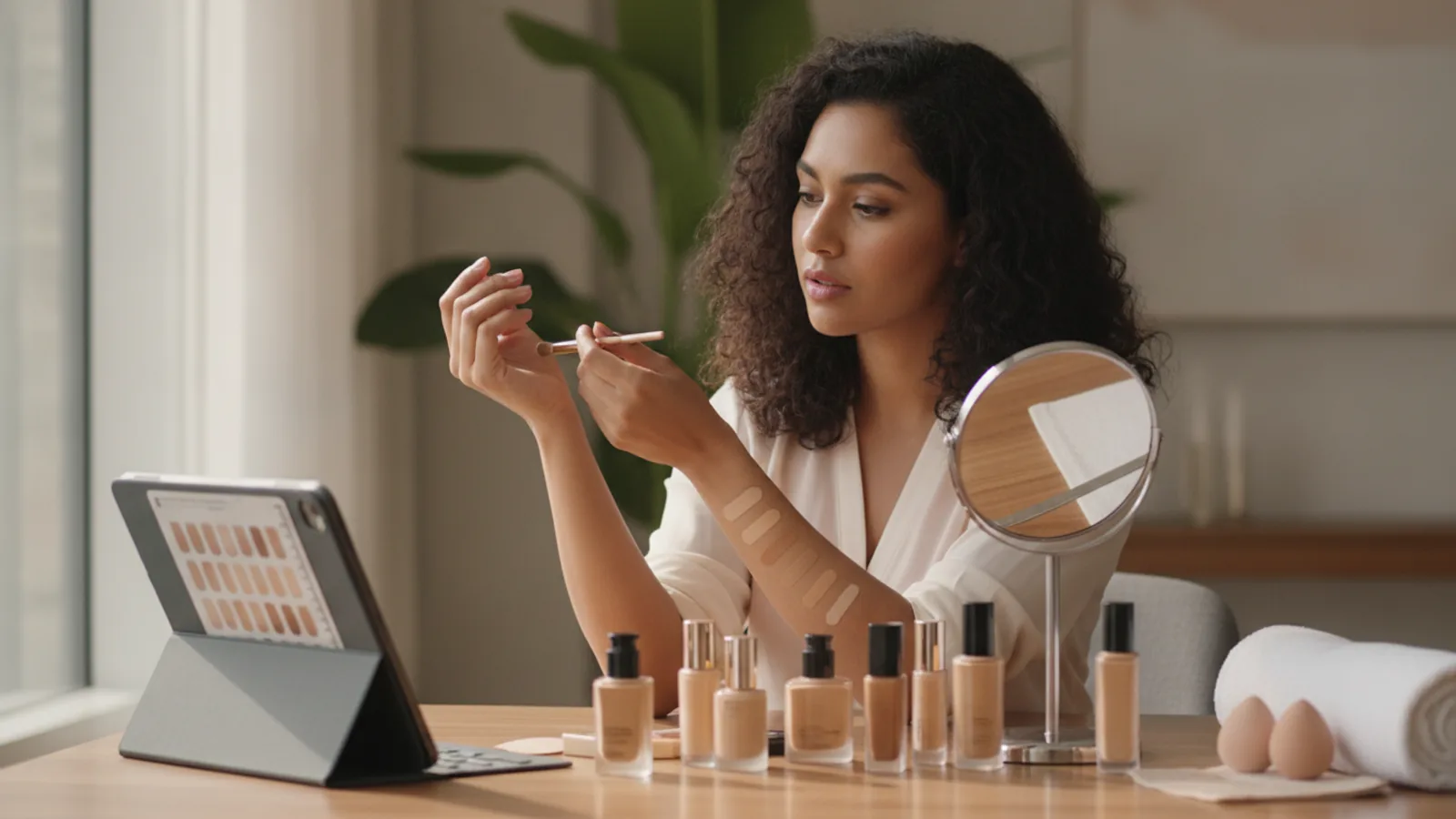
When you place your order, choose a time when you will be at home to receive it. After it arrives, wait until you have a free morning or afternoon to test it properly. Wash your face, apply moisturizer, and wait a few minutes for it to absorb. Apply a small amount of the foundation to your jawline, not your wrist or hand, because your face and neck may have a slightly different tone. Then step into natural window light and check the blend. If it disappears into your skin, you have a match. Take a selfie in that light and also ask a friend or family member to look at you to confirm. If it is off, see if the retailer has an exchange or return policy. This final test ensures you don't wear a mismatched foundation for a full day.
Quick Reference
| Situation | Action | Why it helps |
|---|---|---|
| Your veins appear both blue and green, and you can't tell your undertone. | Use the white paper test: hold a white sheet next to your face and look in a mirror. If your skin appears yellow, you're warm; if pink, cool; if neither, neutral. | This test neutralizes surrounding colors and helps you see the subtle hue of your skin, making a more accurate undertone identification possible. |
| You found a shade that looks perfect in the product image but no description of undertone. | Look up the foundation's official shade chart or customer reviews to see if anyone mentions 'rose' or 'golden' undertones for that shade. | Photos are edited and can mislead, while written evidence from users gives you a clearer idea of the actual hue. |
| Your virtual try-on shows a good match, but you are worried about oxidation. | Search online for 'does [shade name] oxidize' and read feedback from reviewers who mention a color change after application. | Many foundations darken or become more orange within an hour, and user reports are the best clue to anticipate this effect. |
Common Issues
- The foundation looks too yellow/orange on your skin after 30 minutes.: Check if you have a cool or neutral undertone—if so, choose a shade with a pink or neutral base instead. If the match was correct but it oxidized, consider a shade one step lighter next time.
- The foundation appears ashy or gray in natural light.: This happens when a shade is too pale or has a strong white base. Choose a shade with a slightly deeper tone or one with warm undertones to counteract the gray cast.
- You can see a visible line where the foundation ends on your jaw.: Always blend the foundation down your neck and over your jawbone. If the shade is exactly right, the line should disappear; if not, you may have picked the wrong shade.
Advanced Tips
- Take a selfie in both natural daylight and indoor lighting to see how the foundation changes your appearance in different environments.
- Use a color-correcting primer underneath if you have redness or discoloration, but do not let it alter your undertone analysis.
- When choosing between two similar shades, buy both if your budget allows, test them side-by-side on your jawline for a day, and return the one that does not blend seamlessly.
Final Checklist
- Confirmed your undertone using at least two methods (vein test and white paper test) in natural light.
- Read the typed shade description and compared it to your undertone; noted if it says 'cool,' 'warm,' or 'neutral.'
- Used a virtual try-on only as a rough guide, not as a final decision, and checked the result on another device.
- Reviewed at least five customer reviews from people with a matching skin tone to see how the shade appears in real life.
FAQ
Can I use a shade matching app to find my foundation shade online?
Yes, but treat it as a starting point. Apps can be accurate if you photograph your skin in even, natural light, but they may not account for your undertone precisely. Always cross-check the app's suggestion with your own undertone analysis and customer reviews.
What should I do if the foundation arrives and it's the wrong shade?
Do not wear it immediately. Check the retailer's return policy—many allow returns or exchanges for color mismatches within a certain timeframe. Some stores offer free returns by mail. Also, you can contact customer service and explain the issue; they often provide guidance or a replacement.
How do I know if a foundation will oxidize before buying?
You cannot know for sure until you test it on your skin, but you can look for clues in reviews. Search for 'oxidize' or 'color change' in the product's review section. Also, foundations with a higher amount of certain pigments may darken more. If you are concerned, choose a shade one step lighter than your true match, as it may adjust after application.