Common Mistakes When Planning A Beauty Product Patch Test Routine For New Formulas
A practical step-by-step guide to common mistakes when planning a beauty-product patch-test routine for new formulas, including preparation, instructions, common issues, tips, and next steps.
Common Mistakes When Planning A Beauty Product Patch Test Routine For New Formulas
Patch testing is a crucial step before introducing any new beauty product into your routine, especially when you have sensitive skin or are prone to allergies. This guide outlines common planning mistakes, such as choosing the wrong test area, not following the correct frequency, and ignoring the product's full ingredient list. It provides a structured approach to patch testing, including preparation, step-by-step execution, troubleshooting common issues, and advanced tips for accurate results. By following this guide, you can minimize the risk of adverse reactions and make informed decisions about which products are safe for your skin.
Fast Answer
- Always patch test on a small, discreet area like the inner forearm, and repeat the test for at least 5-7 days to catch delayed reactions.
- Do not mix patch testing with introducing other new products; isolate the test to one product at a time to accurately identify the culprit.
Before You Start
- Choose a test area: Select a clean, hairless area like the inner forearm or behind the ear. This area is sensitive enough to show reactions but discreet if irritation occurs.
- Gather supplies: You will need the new product, a cotton swab or clean finger, a small bandage or patch (optional but helpful), and a gentle cleanser and fresh towel for cleaning the area.
- Read the ingredient list: Familiarize yourself with the product's ingredients, noting any known allergens or irritants. This helps you anticipate potential issues and speak with a dermatologist if needed.
- Set a schedule: Plan to apply the product at the same time each day, morning and evening, for at least 5-7 days. This consistency is key to observing any cumulative effects.
Step-by-Step Instructions
Choose the Right Test Site
Select a clean, dry area on your body that you can easily observe and that is representative of the skin where you intend to use the product. The inner forearm is a common choice because it is sensitive but not as visible as the face. Alternatively, the area behind the ear is also highly reactive and mimics facial skin closer. Avoid testing on broken, irritated, or sunburned skin, as this will skew results. Clean the area with a gentle cleanser and pat dry with a clean towel. Clip or shave if necessary to ensure the product comes into direct contact with the skin. Mark the test area with a washable pen or apply the product to a small square using a cotton swab, ensuring you apply a thin, even layer. This location allows you to cover it with a bandage if needed and monitor twice daily without interfering with your daily activities.
Apply a Small Amount Correctly
Use a clean cotton swab or a clean fingertip to scoop a pea-sized amount of the product. This is sufficient because you want to test how the product interacts with a small area, not apply a full dose. Spread the product evenly over the test site, covering an area about the size of a coin. Do not rub it in vigorously; simply apply a thin layer and let it absorb. Avoid getting the product on surrounding untreated skin, as that could lead to cross-contamination or spreading irritation. After application, wash your hands thoroughly to avoid accidentally transferring the product to other parts of your body, such as your eyes or mouth. If the product has a strong scent, be cautious; fragrance is a common irritant. Keeping the application area small ensures that any reaction is contained and manageable.
Cover the Area (Optional)
After applying the product, you may choose to cover the test area with a sterile bandage or patch. This is particularly useful if you plan to continue with your day and want to prevent the product from rubbing off onto clothing or other surfaces. A breathable bandage is preferable to allow air circulation, as occlusive materials can cause trapping of sweat and lead to irritation that is not due to the product itself. Press the bandage gently so that it adheres, but not too tight that it restricts movement or leaves marks. If the product is a rinse-off type, such as a cleanser, follow the product instructions: apply, leave for the recommended time, then rinse thoroughly. In that case, covering is not necessary. The main goal is to ensure the product remains in contact with the skin for the full test duration, so if you are not covering, be mindful not to wash or rub the area.
Monitor Reactions Twice Daily
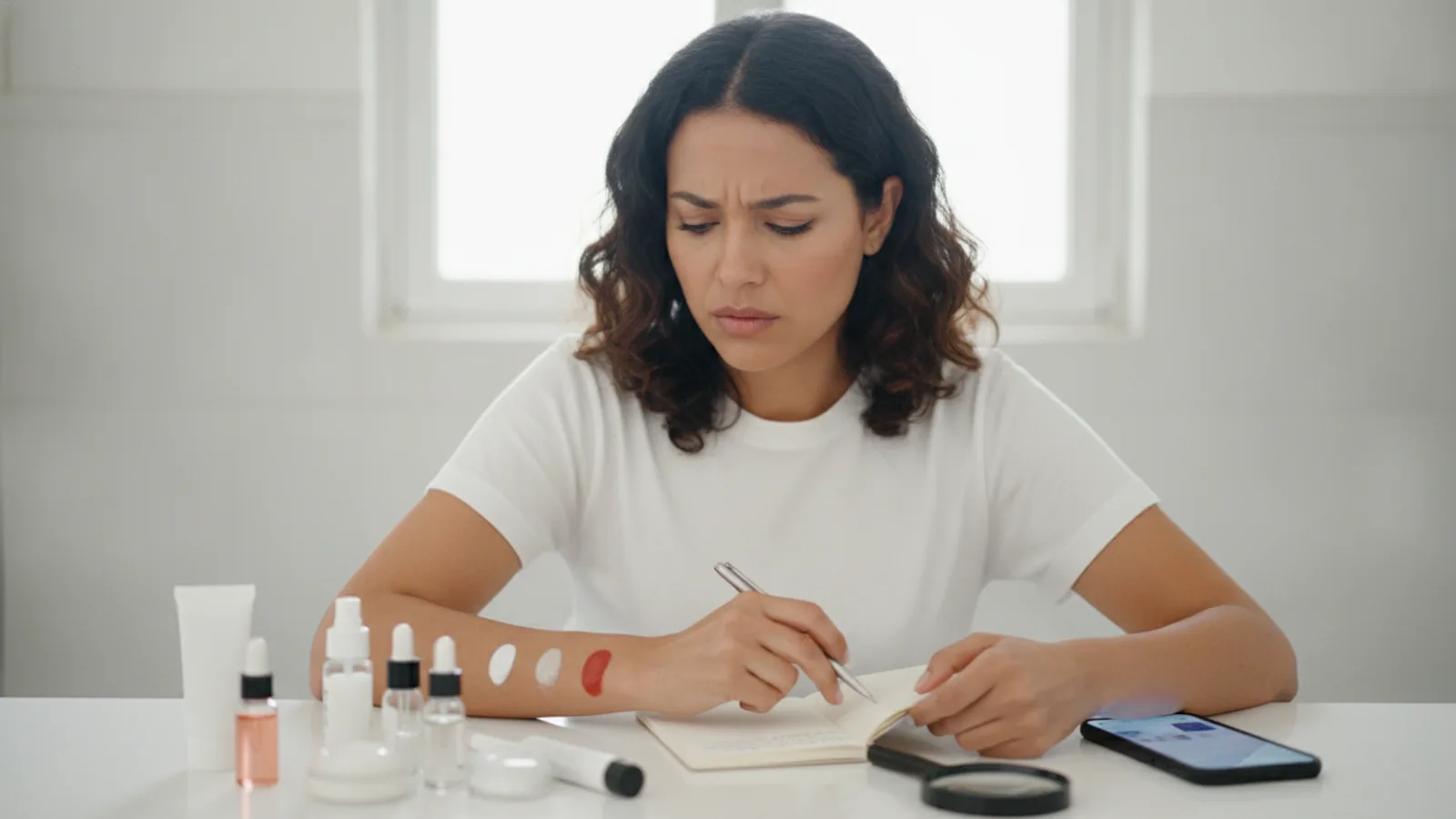
Check the test site at least twice a day, preferably morning and evening, for the entire test period of 5-7 days. Look for any signs of redness, swelling, itching, burning, or a rash. Also, feel the area gently with a clean finger to detect any bumps or texture changes. Take a photo with your phone if you have one to track subtle changes, as remembered observations can be unreliable. It is important to notice delayed reactions that may appear after repeated use. If you see any reaction, even mild, you should discontinue the test immediately and note the day and time of onset. Do not apply any other product to the test area, including lotions or oils, as that will contaminate the test. Record your findings in a notebook or app, describing the severity and type of reaction. This systematic monitoring is essential to make an informed decision about using the product.
Stop and Evaluate at Any Sign of Reaction
If at any point you develop redness, itching, swelling, or any discomfort at the test site, stop testing immediately. Wash the area with mild soap and lukewarm water to remove the product, and pat dry gently. If the reaction is severe, such as blistering, weeping, or intense pain, seek medical advice. For mild reactions, apply a soothing, fragrance-free moisturizer or a cool compress to ease discomfort. Note the time and date of the reaction, the product used, and the severity. This information is valuable if you consult a dermatologist. Even a mild reaction is a clear sign that your skin does not tolerate the product, and you should avoid using it on your face or body. Do not attempt to continue the test after a reaction, as this could lead to a more severe response.
Interpret Results After 5-7 Days
Assess the test area after 5-7 days of repeated application, assuming no reaction has occurred. If the area shows no redness, itching, swelling, or other irritation, it is likely that you can safely use the product on a larger area. However, remember that patch testing is not foolproof; it reduces risk but does not guarantee zero reaction when used on the face, which can be more sensitive. Start by using the product on a small facial area, like the jawline, for a few days before gradually increasing the area. If you had a reaction, the product is not suitable for your skin. Look for alternative formulas or consult a dermatologist for a patch test in-office. Document the outcome for future reference, and always patch test new products individually, even from the same brand.
Quick Reference
| Situation | Action | Why it helps |
|---|---|---|
| You experience mild redness and itching after first application | Remove the product with a gentle cleanser and rinse with cool water. Apply a cool compress for 10 minutes. Do not apply the product again and observe the area for 24 hours. If swelling or blisters occur, seek medical attention. | Mild redness and itching can indicate an irritant or allergic reaction. Immediate removal prevents further irritation and allows you to assess the severity. Cool compress soothes the skin, reducing discomfort. |
| No reaction appears after 3 days of testing | Continue the test for a full 5-7 days, applying the product twice daily. After the test period, introduce the product to a small facial area (e.g., jawline) for 3-4 days before using it on the entire face. | Delayed allergic reactions can appear after 48 hours, so a longer test period increases safety. A gradual facial introduction helps your skin adapt and catches any reactions that are specific to the face. |
| You need to test multiple new products at once | Do not test multiple products simultaneously. Test each product individually, with a 1-2 week gap between tests. Alternatively, if you must test together, apply each product to separate test areas and label them clearly. | If you test multiple products together and a reaction occurs, you won't know which product caused it. Isolating tests ensures accurate identification of the culprit, saving time and skin irritation. |
Common Issues
- Redness or rash appears after the test period ends: If you notice a reaction after you have concluded the test, stop using the product immediately. Apply a gentle moisturizer to soothe the area. If the reaction persists or worsens, consult a dermatologist. Note that reactions can sometimes occur after repeated use, so always be observant when starting any new product.
- The test area becomes dry or flaky: Dryness and flaking can be a sign of irritation or a reaction to the product, especially if it contains drying ingredients like alcohol or certain acids. Discontinue the test and apply a fragrance-free moisturizer to the area. If the flaking persists, see a dermatologist. Consider that the product might be too strong for your skin type.
- You are uncertain if a reaction is due to the product or something else: Keep a diary of everything you touch, including laundry detergent, soaps, and other cosmetics. Also, note any dietary changes or stress levels. To confirm, you can re-test the product on a different, clean area. If the reaction recurs, it is likely the product. If not, the first reaction may have been accidental.
Advanced Tips
- Split-test a product by applying it to two different areas—one on your inner arm and one behind your ear—to compare how different skin types react. This can provide more comprehensive information.
- If you have a history of allergies, consider using a 48-hour closed patch test with a small area under an occlusion patch, such as a bandage, to increase sensitivity detection. Follow the manufacturer's instructions for the patch.
- When testing a product that contains active ingredients like retinol or acids, start with a lower concentration or shorter contact time, and consider testing on a small facial area after the initial patch test to ensure tolerance.
Final Checklist
- Choose a discreet test area like the inner forearm and cleanse it properly before starting.
- Apply a small, pea-sized amount of the product to the test area and cover with a bandage if necessary.
- Monitor the test site twice daily for at least 5-7 days, looking for any signs of irritation.
- If no reaction occurs, gradually introduce the product into your routine, starting with small facial areas, and keep a record of your testing results.
FAQ
How long should I patch test a new product?
A standard patch test should last at least 5-7 days, with application twice daily. This duration allows for both immediate and delayed reactions to appear. Immediate reactions can occur within minutes, while delayed hypersensitivities may take up to 96 hours. Extending the test to a week ensures you catch most potential reactions. For products with active ingredients, a longer period may be prudent.
Can I patch test multiple products at the same time?
It is not recommended to patch test multiple products simultaneously, as it becomes difficult to identify which product causes a reaction if one occurs. If you must, you can apply each product to a separate area, such as one on each inner forearm, and label them clearly. However, this increases the risk of cross-contact, and a reaction could be due to an interaction between products. It is safer to test one product at a time, waiting 1-2 weeks between tests.
What should I do if I experience a severe reaction during patch testing?
If you experience severe symptoms such as blistering, intense burning, swelling of the face or throat, or difficulty breathing, immediately remove the product with mild soap and water, and seek emergency medical attention. Do not attempt to treat it yourself with topical creams. A severe reaction indicates a serious allergy or irritant contact dermatitis that requires professional medical evaluation. After emergency care, consult a dermatologist for allergy patch testing.