How To Plan A Fragrance Test Before Committing To A Full Bottle
A practical step-by-step guide to how to plan a fragrance test before committing to a full bottle, including preparation, instructions, common issues, tips, and next steps.

How To Plan A Fragrance Test Before Committing To A Full Bottle
Testing a fragrance before buying a full bottle is essential because a scent changes on your skin over several hours. This guide provides a structured approach to sampling, from choosing where to test to interpreting how the fragrance evolves. By following these steps, you can avoid the disappointment of a blind purchase and find a scent that truly suits you.
Fast Answer
- Apply the fragrance to your pulse points and carry a sample card for periodic sniffing over the day.
- Track the fragrance's development through its top, heart, and base notes to ensure you like its full evolution.
Before You Start
- Start with a clean, unscented forearm: wash with unscented soap and avoid using lotions or deodorants that might interfere.
- Choose a day when you have few activities and can step outside to test how the scent reacts to fresh air.
- Keep a small notebook or a phone note dedicated to recording your fragrance impressions at different times.
- Carry a paper coffee cup or a dedicated scent strip so you can smell the fragrance without applying it to your skin.
Step-by-Step Instructions
Prepare Your Skin for a Clean Test
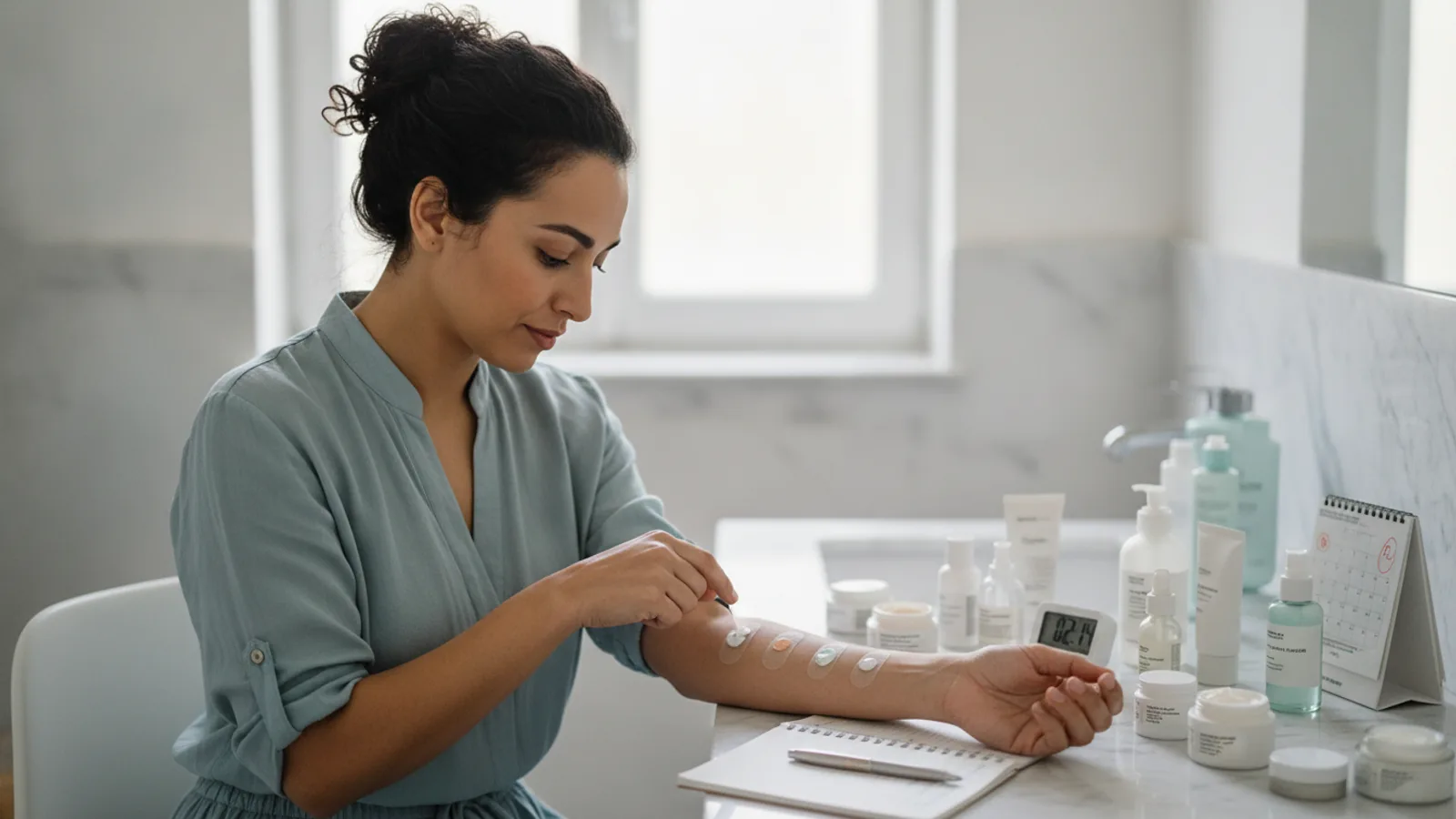
Begin with clean, unscented skin because any residue from soap, lotion, or other products can alter how the fragrance develops. Wash your lower arm with a mild, unscented soap and pat it dry. Avoid wearing any scented deodorant, perfume, or aftershave that day. Also, avoid touching your skin with your other hand after applying other products. A clean surface ensures that the scent you smell is purely the fragrance, not a chemical reaction with leftover lotion or oils. Before you spray, do a quick sniff of your bare skin to confirm it has no lingering scent. This step matters because perfume interacts with your skin's natural oils and pH; any foreign substance can distort the top notes and make the fragrance smell different from its true character. If you are testing on paper, skip this step, but for a real-world experience, your skin is the best test site.
Choose the Right Testing Environment
Testing in a heavily perfumed shop or outdoors in strong wind can quickly overwhelm your nose or blow the scent away. Pick a quiet time and a well-ventilated space where you can control the initial application. Many stores offer testers, but you can also test at home with a decant. If you are in a store, stand near an open doorway or window and avoid staying for more than five minutes to prevent olfactory fatigue. When you are ready to spray, hold the nozzle about six inches from your arm and apply one or two sprays only. Too much fragrance will numb your nose and make it difficult to assess. After spraying, do not rub your wrists together because friction can crush the scent molecules and alter the development. Let the spray dry naturally on your skin. This environment control matters because your sense of smell quickly adapts; a neutral, fresh setting gives you a fair impression of the initial blast before your nose starts to block it out.
Spray and Record the Initial Impression
Immediately after spraying, take a gentle sniff from a few inches away, but do not bury your nose in the spray. Note the first burst: is it citrusy, spicy, floral, or something else? Write down your first impression and the time. This first encounter is the top note, and it usually evaporates within fifteen minutes. Do not judge the fragrance on this alone, because the top notes are just the introduction. After recording, step into fresh air for a minute to clear your senses. Then, over the next ten to fifteen minutes, periodically smell your skin from a distance of a few inches, not directly. The scent will start to soften and reveal the heart notes. Recording your impressions at this stage is critical because your memory of the initial blast fades quickly. Without notes, you will likely overemphasize the ending and forget the opening. Your goal is to capture the arc of the scent, so treat this as data gathering, not a verdict.
Assess the Heart Notes After Thirty Minutes
About thirty minutes after application, the top notes have faded, and the heart notes begin to emerge. These middle notes form the core of the fragrance and can last for several hours. Find a quiet spot, preferably outside or by a window, and smell your arm from about three inches away. At this stage, you should be able to identify the predominant character: is it heavier, sweeter, or more woody than the opening? Take note of how the scent has changed and whether it feels balanced. Walk around a little to see if the scent projects more when you move; your body heat will radiate it. This is the time to decide if you like the direction the fragrance is taking, because the heart notes are the personality of the perfume. If you are not fond of the heart, the base notes will echo it, and you likely will not enjoy the whole experience. So pause and ask yourself: do I want to smell like this for the next few hours?
Evaluate the Base Notes After Several Hours
After four to six hours, the base notes become the dominant scent on your skin. These are the longest-lasting ingredients, such as woods, musks, or resins, and they determine the final trail. At this point, the fragrance has blended with your body chemistry, so check how it smells on your skin directly, and then take a step back and see if you can detect a soft cloud around you. Write down whether the scent has become more pleasant, more subtle, or perhaps too strong. Also, note how close to your skin the scent sits now; if it is a skin scent, you need to be close to smell it, while some perfumes project more. This evaluation matters because the base notes are what you and others will smell for most of the day. If you are testing in a store, you may have left by now, so plan to spend the day with the sample. If you like the base notes, you have a good sign, but remember that your skin's oils can change a fragrance, so a second test on another day is wise.
Review Your Notes and Decide with a Second Test
After a full day of wearing the fragrance, gather your written observations from every stage and read them over. Do you still feel positively about the overall evolution? Remember that your initial excitement may have faded by the end, but the base notes are what you will live with. If the fragrance passed your test for all phases, wait a day or two and then repeat the entire process once more. Wearing the scent on a different day, perhaps in different weather or after a meal, will tell you if it is consistent. During the second test, avoid wearing any other fragrance and use the same preparation. After this second trial, you can make a confident decision. If you still enjoy it, you are ready for a small decant or travel size before committing to a full bottle. This final review matters because your skin's chemistry can change slightly with hormones, diet, and stress, and a single test may not give you the whole picture.
Quick Reference
| Situation | Action | Why it helps |
|---|---|---|
| You are in a store and want to test multiple fragrances without overwhelming your nose. | Limit yourself to testing a maximum of three fragrances on paper strips, and sniff each strip at least thirty minutes after spraying, not immediately. | Your nose adapts quickly, and testing many scents at once leads to confusion; spaced sniffing reveals the true development. |
| A fragrance smells amazing on paper but seems weak or different on your skin. | Apply the fragrance to your wrist and wait an hour before judging; compare it to a paper strip you kept from the same spray. | Skin chemistry can alter or mute certain notes, and the dry-down on skin is the only accurate test for how you will wear it. |
| You are torn between two fragrances and cannot decide which to buy. | Spray one on each wrist and wear them for a full day, taking notes every few hours, and then decide after seeing which one you preferred at the end. | A direct comparison on your own skin over time gives you practical evidence of which scent fits your lifestyle and preference. |
Common Issues
- The fragrance disappears after only an hour on your skin.: Reapply to a well-mosturized area, or test it on a different pulse point; sometimes, dry skin does not hold scent, so using an unscented moisturizer beforehand can extend longevity.
- The initial spray smells like alcohol and burns your nose.: Give it five minutes before smelling again; the alcohol evaporates quickly, and the true notes emerge. Also, spray from a distance of at least six inches to allow for proper dispersion.
- You notice the scent changes dramatically from morning to afternoon.: That is normal fragrance development, not a flaw. Track the phases and decide if you enjoy the final dry-down. If not, consider that the base notes may not suit your preference.
Advanced Tips
- Test a fragrance with your diet and stress in mind: if you are fasting or anxious, your skin's chemistry shifts, so repeat the test on a normal day for a realistic read.
- To evaluate projection, ask a friend to smell you from a conversational distance after a few hours, because your own nose may be desensitized to your scent.
- Keep a persistent log of every fragrance you test, including the weather, your mood, and what you ate, to notice patterns in how scents behave on your skin.
Final Checklist
- Have you tested the fragrance on your skin for at least half a day, from initial spray to base notes?
- Did you record your impressions at each stage and compare them to a second test on another day?
- Have you checked whether you like the scent in both a close-up sniff and a room-filling projection?
- Did you ensure your skin was clean and unscented before testing, and did you avoid rubbing the fragrance?
FAQ
How long should I test a fragrance before making a decision?
At least a full day, preferably eight hours or more, so you experience the top, heart, and base notes. For an even better decision, test the fragrance on two separate occasions, because your skin chemistry and environment can influence the scent.
Can I test a fragrance on paper instead of my skin?
Paper gives a rough idea of the scent, but it does not react with your body chemistry. Always test on skin for a true sense of how it will smell on you. Paper is useful for comparing multiple scents at once, but the final choice should be skin-tested.
What is the best way to compare two or more fragrances in a store?
Spray one on each wrist and use paper strips for additional options, but limit yourself to no more than three at a time. Sniff them at different intervals and step outside to clear your nose. Never rush the decision; take your time and revisit your samples later.